West of Antalya. A Coastline of Many Characters
From Kemer’s pine-covered mountains and the ancient homeland of Saint Nicholas to the intimate streets of Kaş, the hillside villas of Kalkan and the sheltered bays of Fethiye. A journey along Türkiye’s western Mediterranean coast, where every destination has its own character, architecture and idea of life by the sea.
Some coastlines are best measured in kilometres. Others are better measured in impressions.
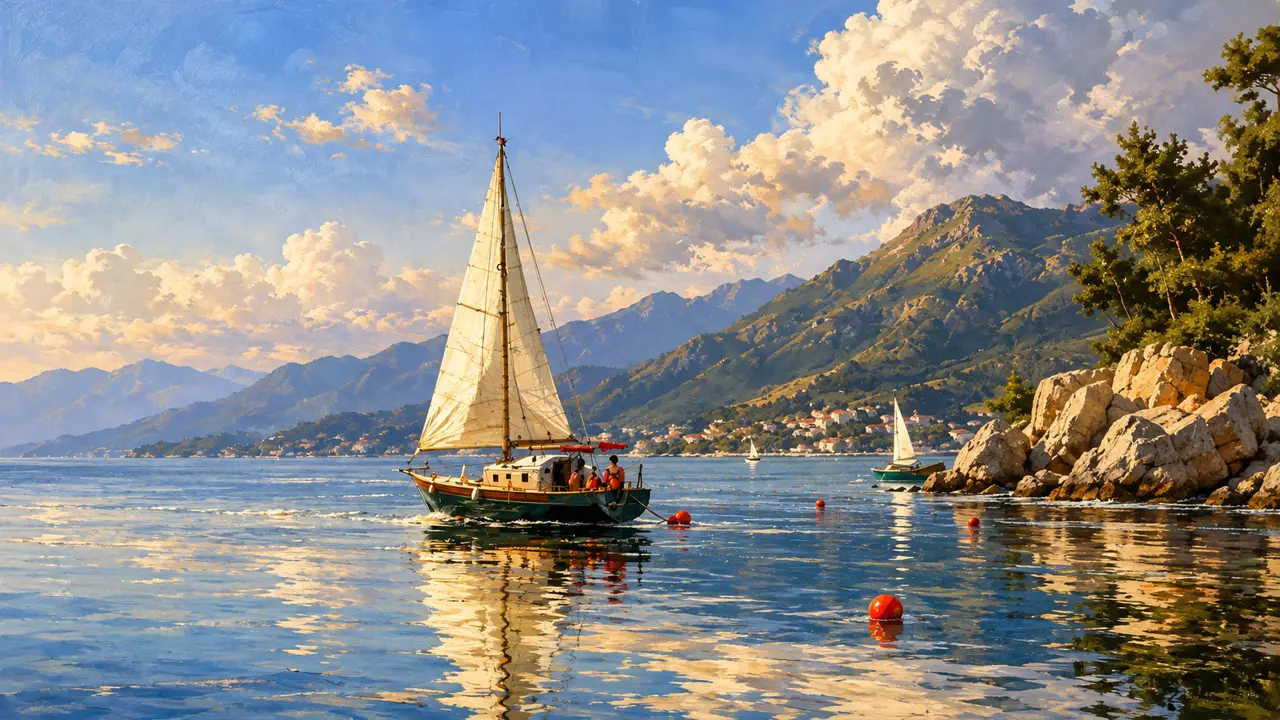
West of Antalya, the Mediterranean gradually changes character. Wide beaches give way to secluded coves. Mountains draw closer to the water. Resort boulevards become narrow streets, stone houses and terraces where the sea feels like an extension of the living room.
The journey takes us through Kemer, Demre, Kaş and Kalkan before reaching Fethiye — a region deserving a chapter of its own.
This is not a ranking of seaside resorts. It is an exploration of what makes each place distinctive, and where a week by the sea might quietly turn into a lifetime.
Kemer. Where the Mountains Meet the Sea
The first thing you notice about Kemer is the mountains. They do not linger on the horizon; they descend almost to the water's edge. Pine forests cover the slopes, the air carries the scent of resin, and the sea appears especially clear against the deep green landscape.
Kemer is well established as a holiday destination, yet beyond the large resorts lies a different way of life. Çamyuva and Tekirova offer gardens, smaller residential neighbourhoods and a gentler pace. Around Phaselis, ancient ruins stand beside beaches sheltered by pine trees.
Kemer appeals to those who wish to remain relatively close to Antalya while enjoying the scale of a smaller coastal town. It is worth remembering, however, that residential neighbourhoods and tourist areas can feel very different during winter.
Demre. The Land of Saint Nicholas
Demre is rarely the first place people consider when searching for a home by the Mediterranean. Yet its history gives it an extraordinary sense of identity.
It was here, in ancient Myra, that Saint Nicholas served as bishop during the fourth century. Born in nearby Patara, he became one of Christianity's most widely venerated saints, particularly beloved in the Russian Orthodox tradition.
The Church of Saint Nicholas still stands in Demre, drawing pilgrims and visitors from around the world.
For generations, Saint Nicholas has been regarded as a protector of travellers and sailors, a figure associated with compassion, generosity and help in times of difficulty.
There is something remarkable about discovering that the landscapes connected with his life are not distant or inaccessible, but part of this sunlit Mediterranean coast.
Nearby, the ancient city of Myra preserves Lycian rock-cut tombs and an impressive Roman theatre. Beyond these historical monuments lie citrus groves, small villages and quiet country roads.
Demre offers a different proposition from the fashionable coastal resorts: authenticity, tranquillity and a close connection with both nature and history.
Kaş. The Art of Living with Less
Kaş could never be mistaken for a large resort.
There is no attempt to impress through scale. Instead, there is a small harbour, whitewashed façades, wooden shutters, bougainvillea climbing over doorways and café tables spilling into narrow streets.
In Kaş, an entire day can pass without any particular plan. Coffee in the morning, a walk down to the water, an afternoon in the old town, and the simple pleasure of watching boats return to the harbour.
It is precisely this apparent simplicity that makes the town so appealing.
Kaş attracts those who value intimacy, natural beauty and a slower rhythm. Its hillside geography, however, deserves consideration: homes with spectacular views may also involve steep roads, steps and a less convenient walk into town.
Kalkan. Architecture of the Horizon
If Kaş charms through its spontaneity, Kalkan seems designed around the act of looking out to sea.
The town rises above its bay in a succession of white houses, terraces, swimming pools and large windows facing the horizon. Here, the landscape itself has become an architect.
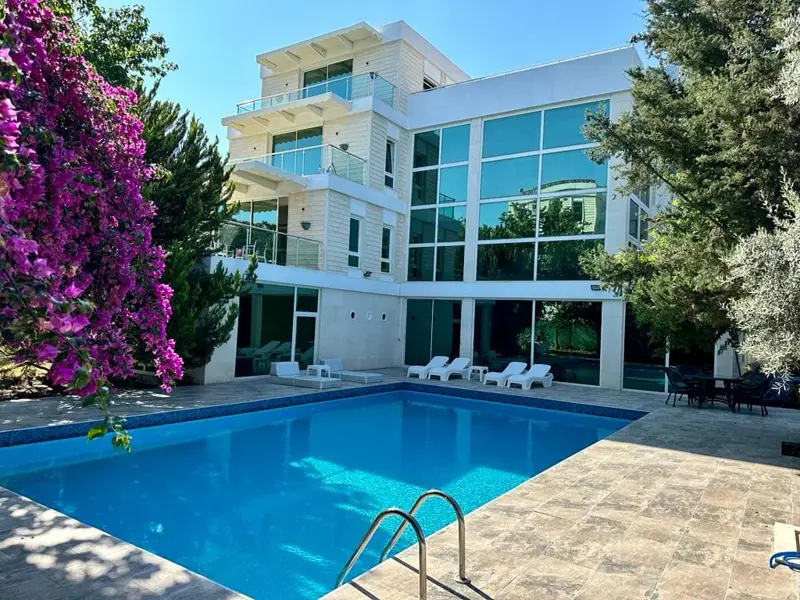
Kalkan is particularly interesting for contemporary villa living. Sea views influence not only a property's appeal but also its design: the orientation of living rooms, bedrooms, pools and outdoor dining areas.
Yet a beautiful photograph does not always tell the whole story. The gradient of the land, access roads, privacy and the possibility of future construction in front of a property may matter more than the finishes inside.
Kalkan attracts buyers seeking private villas for personal use or seasonal rental. Any projected rental income and the legal requirements for short-term letting should be assessed individually.
Fethiye. Where a Holiday Becomes a Way of Life
After the smaller coastal towns, Fethiye feels different.
There is more space, a stronger sense of everyday life and a much wider range of possibilities for what a home by the sea might look like.
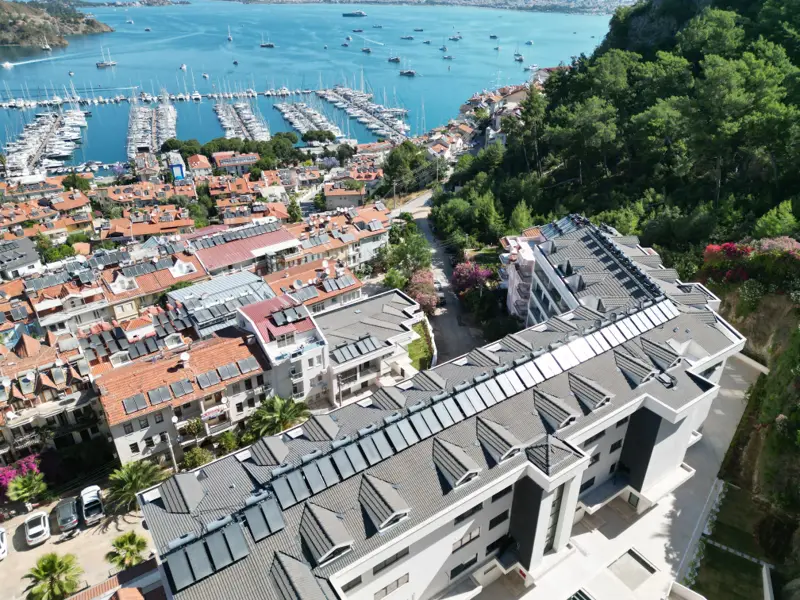
Fethiye is not a single destination with one defining character. It is an entire geography of lively urban neighbourhoods, seaside promenades, peaceful valleys, mountain villages and sheltered bays.
And it is precisely this diversity that makes the region particularly appealing for year-round living.
Fethiye and Çalış. Life Beyond Summer
In central Fethiye, life continues long after the summer visitors have gone. Shops, schools, medical facilities, markets and everyday services remain part of the city's rhythm.
Çalış offers a different atmosphere: a long waterfront promenade, expansive sunsets, cycling routes and residential streets where the sea becomes part of an ordinary day.
Here, it is easy to imagine not just a perfect week in August, but an ordinary Tuesday in November.
For anyone considering a permanent home, that distinction matters.
Ovacık and Hisarönü. Between Mountains and Sea
Above the coastline, at the foot of Mount Babadağ, lie Ovacık and Hisarönü.
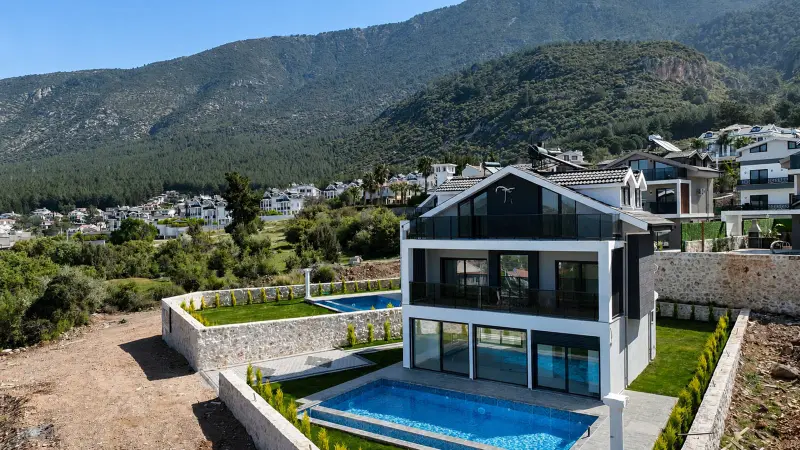
The air feels different here, the mountain views open up, and the architecture takes on a more residential scale. Ovacık is known for villas with private gardens and pools, while Hisarönü offers a livelier resort atmosphere during the tourist season.
These neighbourhoods appeal to those who value private outdoor space while remaining within reach of Ölüdeniz and the wider amenities of Fethiye.
Ölüdeniz. Beauty Beyond Description
The turquoise lagoon, pine-covered hills and paragliders descending from Babadağ create one of the most recognisable landscapes on Türkiye's Mediterranean coast.
Yet Ölüdeniz is first and foremost a remarkable natural setting and a popular visitor destination.
For year-round living, many people prefer neighbouring residential areas, keeping the lagoon as somewhere to visit whenever the mood takes them.
Sometimes the best way to live close to extraordinary beauty is not to live directly at its centre.
Kayaköy. The Beauty of Memory
A short distance from the familiar resort landscape lies Kayaköy.
A hillside covered with hundreds of old stone houses. Empty windows, the remains of churches and narrow paths once walked by the village's inhabitants.
Kayaköy's history is closely connected with the population exchange between Greece and Türkiye in 1923. Today, it possesses a haunting, almost contemplative beauty.
The surrounding valleys attract those drawn to a more rural aesthetic: olive trees, natural stone, gardens and modest country houses.
However, the area's historical and protected status makes careful legal due diligence particularly important when considering property.
Göcek. Quiet Luxury by the Water
If the sea is part of everyday urban life in Fethiye, in Göcek it shapes almost everything.
Marinas, sailing yachts, green hills and secluded bays create an atmosphere unlike anywhere else along this stretch of coast.
Luxury here is expressed less through the size of a building than through privacy, access to the water and the freedom to set sail without elaborate plans.
Göcek appeals to buyers for whom a home and a life on the water belong naturally together.
Why Fethiye?
Fethiye's greatest quality is the freedom to choose.
You can live in an apartment close to the waterfront. You can prefer a villa in a green valley. You can wake to mountain views and find yourself beside the sea by evening.
And you can enjoy these different ways of life within one region, with schools, healthcare, markets, restaurants and access to Dalaman International Airport.
For a family considering relocation, this matters just as much as the view from the window. For a second-home owner, it means finding a property that suits personal habits and priorities. For an investor, it offers several distinct property markets rather than one uniform destination.
Fethiye does not promise the same lifestyle to everyone.
That is precisely its appeal.
One Coastline. Five Ideas of Home
Travelling west from Antalya, one gradually realises that the Mediterranean does not offer a single definition of the good life.
Kemer is for those who need mountains and sea in equal measure.
Demre is for those who appreciate tranquillity, history and a deeper sense of place.
Kaş is for those drawn to intimacy and effortless beauty.
Kalkan is for those who dream of a private terrace overlooking the horizon.
Fethiye is for those who want the freedom to choose between different worlds without leaving one region.
Property here is more than a number of square metres on a map of Türkiye. It is a decision about ordinary mornings, the view beyond the window and the place that will eventually begin to feel like home.
Perhaps true luxury is not simply owning a house by the sea.
It is finding the coastline that feels entirely your own.