The Mediterranean Sea: History, Geography and Fascinating Facts
Why is the Mediterranean called the sea in the middle of the land? Why do Turks call it Akdeniz, the White Sea? A journey through its geography, history, ancient civilisations and the turquoise coastline of Antalya.
The Mediterranean Sea: History, Geography and Fascinating Facts
The Mediterranean Sea is much more than a beautiful stretch of turquoise water. It is one of the most remarkable geographical and cultural spaces on Earth — a sea that has connected continents, shaped civilisations and influenced the history of humanity for thousands of years.
For those of us who live on the coast of Antalya, the Mediterranean is part of everyday life. We see it from our windows, walk along its shores and watch its colours change with the seasons. Yet behind this familiar landscape lies an extraordinary history.
Why Is It Called the Mediterranean Sea?
The English name Mediterranean comes from the Latin expression Mare Mediterraneum, meaning “the sea in the middle of the land.”
The word is formed from medius, meaning “middle,” and terra, meaning “land.”
Ancient Romans also used other names, including Mare Nostrum — “Our Sea” — and Mare Internum, meaning “Inner Sea.”
The term Mediterraneum appears in late classical sources, including the writings of Solinus, a Roman author generally dated to the third century AD.
The name describes the sea's geography remarkably well: it is almost entirely enclosed by Europe, Asia and Africa, with only a narrow connection to the Atlantic Ocean.
In Turkish, however, the Mediterranean is called Akdeniz, literally “White Sea.”
The name reflects a traditional Turkish geographical naming system in which colours were sometimes associated with directions. White was associated with the west, while black was associated with the north — hence Karadeniz, the Black Sea.
Where Is the Mediterranean Sea?
The Mediterranean lies between three continents:
Europe to the north
Asia to the east
Africa to the south
It stretches from the Strait of Gibraltar in the west to the shores of the Levant in the east.
Its total area is approximately 2.5 million square kilometres, making it slightly larger than Algeria.
The Mediterranean is around 3,800 kilometres long from west to east, although its width varies considerably.
Its average depth is approximately 1,500 metres, while the deepest known point, the Calypso Deep in the Ionian Sea, reaches more than 5,000 metres.
Despite its immense size, the Mediterranean is classified as an almost enclosed sea because its exchange of water with the Atlantic Ocean is restricted by the relatively narrow Strait of Gibraltar.
Which Countries Border the Mediterranean?
The Mediterranean coastline is shared by 21 sovereign countries.
Europe: Spain, France, Monaco, Italy, Slovenia, Croatia, Bosnia and Herzegovina, Montenegro, Albania, Greece and Malta.
Asia: Turkey, Cyprus, Syria, Lebanon and Israel.
Africa: Egypt, Libya, Tunisia, Algeria and Morocco.
Palestinian territories also have a Mediterranean coastline through the Gaza Strip, although their political status is treated separately in different geographical classifications.
The diversity of these shores is extraordinary. Within a single sea basin, one can encounter the ancient cities of Greece, the ports of Italy, the beaches of southern France, the historic coast of North Africa and the remarkable landscapes of Turkey.
How Is the Mediterranean Connected to Other Seas?
The Mediterranean connects to the Atlantic Ocean through the Strait of Gibraltar, which separates Spain from Morocco.
It is also connected to the Black Sea through a sequence of waterways:
Mediterranean Sea → Dardanelles → Sea of Marmara → Bosphorus → Black Sea.
This route has been strategically important for thousands of years.
The Bosphorus, which divides the European and Asian sides of Istanbul, remains one of the world's most recognisable waterways.
The Mediterranean also connects to the Red Sea through the Suez Canal in Egypt.
Opened in 1869, the canal transformed global trade by creating a direct maritime route between Europe and Asia without the need to sail around Africa.
Was the Black Sea Once a Freshwater Lake?
One of the most intriguing scientific questions concerns the ancient relationship between the Mediterranean and the Black Sea.
During parts of the last glacial period, the Black Sea basin contained water that was considerably less saline than it is today.
In the late 1990s, researchers proposed a hypothesis suggesting that rising Mediterranean waters entered the Black Sea basin in a dramatic flooding event approximately 7,000–8,000 years ago.
This became widely known as the Black Sea deluge hypothesis.
Some researchers suggested that the event may have contributed to ancient flood legends.
However, the hypothesis remains controversial.
Other scientists argue that the reconnection between the two basins may have occurred more gradually, and geological evidence continues to be interpreted in different ways.
It is therefore more accurate to regard the dramatic flooding scenario as a scientific hypothesis rather than an established historical fact.
A Sea That Shaped Civilisations
Few seas have played such an important role in human history.
The Mediterranean connected the ancient Egyptians, Phoenicians, Greeks, Romans, Byzantines and Ottomans.
Its waters carried merchants, explorers, armies, ideas, languages and religions.
The Phoenicians established maritime trading networks across the basin, while Greek city-states founded settlements along distant coastlines.
Later, the Roman Empire controlled much of the Mediterranean and referred to it as Mare Nostrum — “Our Sea.”
For centuries, the sea served as a vast network of communication and commerce.
The Ottoman Empire subsequently became one of the principal powers in the eastern Mediterranean, competing with European states for influence over its islands, ports and maritime routes.
Today, the legacy of these civilisations remains visible in architecture, cuisine, languages and cultural traditions throughout the region.
The Mediterranean Coast of Turkey
Turkey occupies a particularly beautiful section of the eastern Mediterranean.
Its southern coastline includes some of the country's most remarkable natural landscapes, ancient cities and resort destinations.
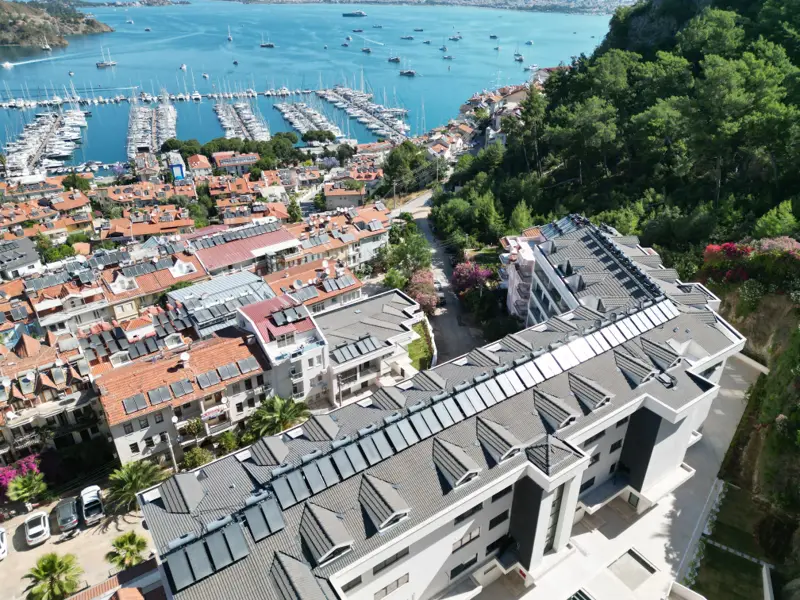
Antalya, Alanya, Kaş, Kalkan and the surrounding coastal settlements offer very different experiences of Mediterranean life.
In Antalya, the sea meets dramatic cliffs, long beaches and the Taurus Mountains.
Further west, the coastline becomes increasingly intricate, with secluded bays, rocky peninsulas and small harbours.
The region is also home to ancient Lycian cities, archaeological sites and historic maritime routes.
The Mediterranean climate — with hot, dry summers and generally mild, wetter winters — has shaped local architecture, agriculture and everyday life for centuries.
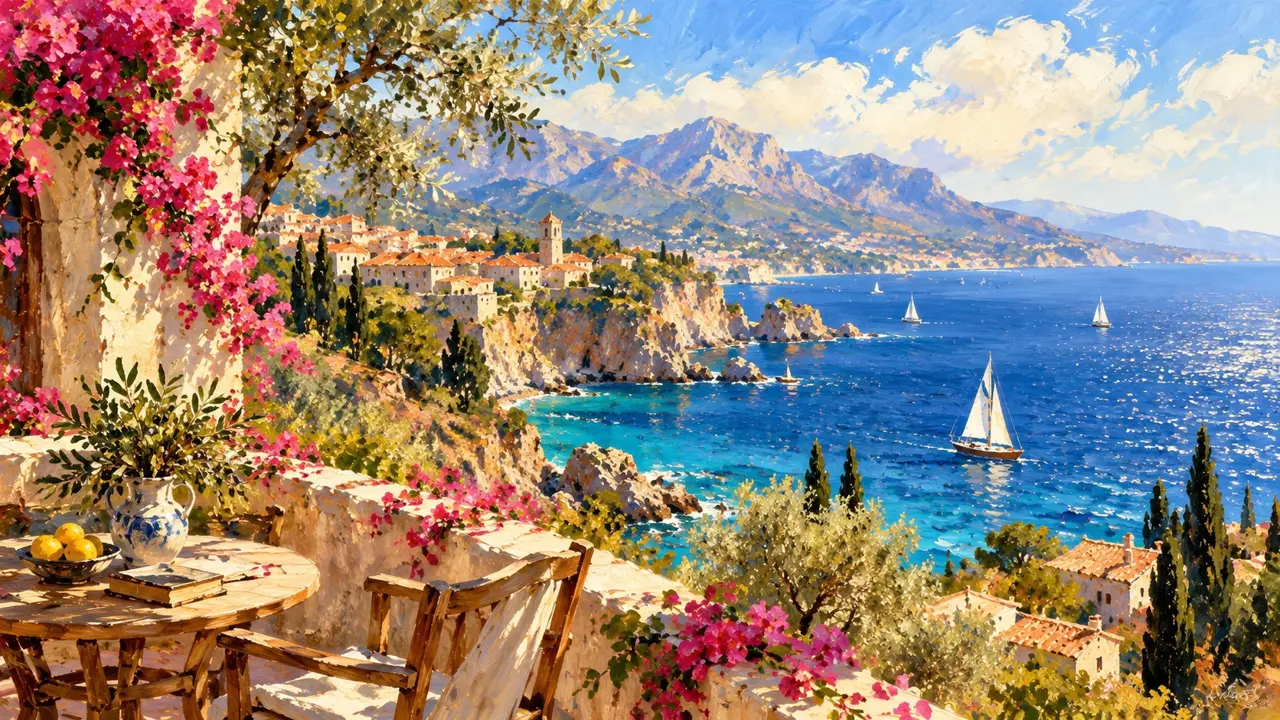
Olive trees, citrus groves, pine forests and bougainvillea have become familiar elements of the landscape.
The Sea as a Way of Life
The Mediterranean has always been more than a geographical feature.
It influences how people build their homes, organise their days, prepare their food and spend their leisure time.
Life along its shores often unfolds around outdoor spaces: terraces, gardens, promenades, cafés and harbours.
For many people, the attraction of the Mediterranean is not simply the climate or the scenery, but the possibility of living closer to nature.
A morning walk beside the water, an evening on a terrace or a weekend sailing along the coast can become part of an ordinary routine.
Perhaps that is why the Mediterranean continues to attract people from around the world.
Its beauty is immediately visible, but its real appeal becomes clearer with time.
To discover the different characters of Turkey's Mediterranean coast, explore Antalya and its surrounding destinationsor read more about the coastline west of Antalya in the INEST JOURNAL.